
Quick Answer: Empath health is about managing the unique physical and emotional challenges that come with being highly sensitive — absorbing others’ emotions, feeling drained in social settings, and struggling with boundaries. The most effective strategies combine daily emotional release practices, intentional rest, body-based self-care, and firm (but kind) limits with energy-draining people. You don’t need to fix your sensitivity. You need tools that work with it.
Key Takeaways
- Empaths and highly sensitive people (HSPs) often experience physical symptoms — fatigue, headaches, digestive issues — that are directly tied to emotional overload.
- Emotional boundaries are not walls. They’re filters. And they’re non-negotiable for empath health.
- Nervous system regulation (think breathwork, cold water, movement) is one of the fastest ways to come back to yourself after absorbing someone else’s emotional weight.
- Sleep and solitude aren’t luxuries for empaths. They’re biological needs.
- Chronic people-pleasing is one of the biggest health risks for sensitive people — it leads to resentment, burnout, and physical illness over time.
- A consistent morning routine can act as an emotional “anchor” before the world gets loud.
- Therapy, especially somatic or trauma-informed approaches, can be genuinely life-changing for empaths with unresolved early wounds.
- Your sensitivity is not a disorder. But it does require intentional care.
What Does “Empath Health” Actually Mean?
Empath health refers to the physical, emotional, and mental well-being of people who experience the world with heightened sensitivity — absorbing the feelings, energy, and pain of those around them, often without meaning to.
If you’ve ever walked into a room and immediately felt the tension, cried at a stranger’s story, or felt physically exhausted after being around a difficult person, you know exactly what I’m talking about.
This isn’t a clinical diagnosis. But the experience is real, and the health consequences of ignoring it are just as real.
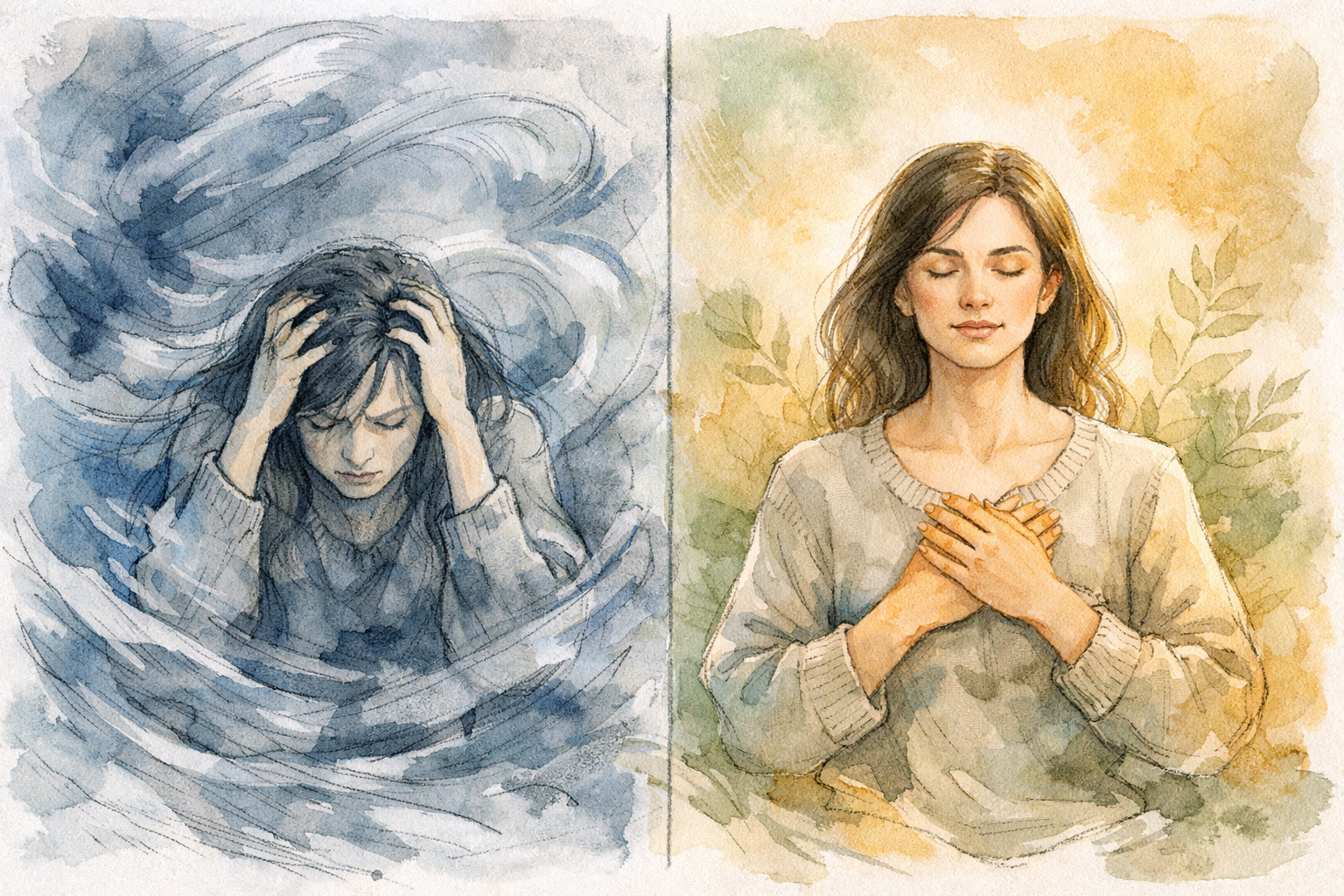
For empaths, “wellness” isn’t just about eating well and exercising (though those matter too). It’s about understanding why your body and mind respond the way they do — and building a life that supports your nervous system instead of constantly overwhelming it.
What Are the Unique Health Challenges Highly Sensitive People Face?
Highly sensitive people face a distinct set of health challenges that most standard wellness advice simply doesn’t account for.
Here’s what tends to show up most:
Emotional exhaustion — Absorbing other people’s emotions all day is genuinely tiring. It’s like running a marathon while everyone else is walking.
Chronic stress responses — Empaths often have a hair-trigger stress response. Loud environments, conflict, or even bad news on social media can send the nervous system into overdrive.
Physical symptoms tied to emotions — Headaches, stomach issues, muscle tension, and fatigue are common in empaths, especially after prolonged social exposure. The mind-body connection is strong, and for sensitive people, it’s very strong.
Sleep disruption — Racing thoughts, replaying conversations, and processing the day’s emotional residue can make falling asleep genuinely hard.
Anxiety and depression — Research consistently links high sensitivity with greater vulnerability to anxiety and depression, particularly in unsupportive environments. (Elaine Aron’s foundational work on Highly Sensitive Persons, published in the late 1990s, laid important groundwork here — though this is a growing area of study.)
People-pleasing and boundary collapse — This one sneaks up on you. Over time, saying yes when you mean no creates a slow burn of resentment and physical stress that chips away at your health.
The hard truth? Most of these challenges go unaddressed because empaths are so focused on everyone else’s needs that their own health becomes an afterthought.
How Do Empaths Manage Emotional Overwhelm Day to Day?
Managing emotional overwhelm as an empath starts with one thing: recognizing when it’s happening before you hit the wall.
Most of us wait until we’re completely depleted. Don’t do that.
Early warning signs to watch for:
- Irritability that seems to come from nowhere
- Wanting to cancel plans you were looking forward to
- Feeling “foggy” or disconnected from yourself
- A tight chest or shallow breathing
- Snapping at people you love
Once you spot the signs, here’s what actually helps:
1. The “whose feelings are these?” check-in. Pause and ask yourself: am I feeling my own emotions, or did I pick these up from someone else? Just naming it creates distance from it.
2. Physical reset. Cold water on your face or wrists, a short walk outside, or even a few minutes of slow breathing can interrupt the overwhelm cycle. Your body holds emotional energy — move it out.
3. Alone time as medicine. Not as a reward. Not as a last resort. As a scheduled, non-negotiable part of your day.
4. Journaling the residue. Writing down what you absorbed — and consciously “giving it back” — sounds a little woo-woo, but it works. It creates a mental boundary between you and what isn’t yours.
“You can’t pour from an empty cup — and empaths tend to pour until there’s nothing left.”
Can Being an Empath Actually Affect Your Physical Health?
Yes. And this is the part most people don’t talk about enough.
The body keeps score. When you’re chronically absorbing stress, conflict, and emotional pain from your environment, your nervous system stays in a low-grade fight-or-flight state. Over time, that has real physical consequences.
| Physical symptom | Likely emotional root for empaths |
|---|---|
| Chronic fatigue | Emotional labor + poor recovery time |
| Digestive issues | Anxiety response, gut-brain connection |
| Frequent headaches | Sensory overload, tension |
| Muscle pain/tension | Stored emotional stress |
| Weakened immunity | Chronic stress depleting resources |
| Skin flare-ups | Stress hormones affecting inflammation |
This doesn’t mean every physical symptom is “just emotional.” Please see a doctor for persistent health concerns. But it does mean that for empaths, addressing emotional health is physical healthcare.
What Self-Care Strategies Actually Work for Empath Health?
Self-care for empaths goes deeper than bubble baths and early bedtimes (though honestly, both help). Effective empath health practices target the nervous system, the emotional body, and the social environment.
Daily non-negotiables:
- Morning quiet time before your phone, before other people’s needs. Even 10 minutes.
- Movement that feels good, not punishing. Walking in nature is particularly grounding for sensitive people.
- Intentional social limits. Not isolation — just knowing your capacity and honoring it.
- A wind-down ritual that signals to your nervous system: the day is done, you’re safe.
Weekly practices worth building in:
- One full afternoon of unscheduled solitude
- A creative outlet (writing, painting, music — anything that lets emotion move through you)
- A check-in with a trusted person who actually gets you
What to skip:
Advice that tells you to “just toughen up” or “stop being so sensitive.” That’s not self-care. That’s self-abandonment.
How Do Boundaries Protect Empath Health?
Boundaries are the single most protective tool an empath has. Without them, every relationship becomes a slow drain.
A boundary isn’t a punishment for someone else. It’s a decision about what you can and can’t sustain.
Practical boundary examples for empaths:
- “I need 30 minutes alone when I get home before we talk about the day.”
- “I can’t take on more right now — I’m at capacity.”
- “I love you, and I can’t be your emotional support person for this one.”
Setting limits feels uncomfortable at first. It might feel selfish. It’s not. It’s what keeps you healthy enough to actually show up for the people you care about.
Conclusion: Your Sensitivity Deserves Real Care
Empath health isn’t a niche concern. It’s a real, daily practice of choosing yourself — your nervous system, your emotional limits, your physical body — even when the world is loud and demanding.
Your next steps:
- Pick one daily practice from this guide and start tomorrow. Just one.
- Identify one area where you’ve been saying yes when you mean no.
- Schedule one block of solitude this week. Put it in your calendar like a meeting.
- Notice your early overwhelm signals and write them down so you recognize them faster next time.
You’re not too much. You’re not broken. You’re a sensitive person in a world that doesn’t always make space for that — and you deserve to build a life that does.
Frequently Asked Questions
Q: Is being an empath a real psychological condition? A: It’s not a clinical diagnosis, but high sensitivity is a well-documented personality trait. Psychologist Elaine Aron’s research on Highly Sensitive Persons (HSPs) suggests roughly 15-20% of the population has a more reactive nervous system. Empaths often identify strongly with HSP traits.
Q: Why do empaths get so tired after social situations? A: Because social interaction for empaths involves more than conversation — it involves processing other people’s emotional states, often unconsciously. That’s extra cognitive and emotional work, and it’s genuinely draining.
Q: Can an empath be in a healthy relationship? A: Absolutely. The key is finding partners who respect your need for solitude, communicate clearly, and don’t rely on you as their sole emotional outlet. Mutual respect makes a huge difference.
Q: What’s the difference between an empath and a highly sensitive person? A: HSP is a research-based term describing sensory and emotional sensitivity. “Empath” is a broader, more spiritual term that many sensitive people use to describe the experience of absorbing others’ emotions. There’s significant overlap.
Q: How do I know if I’m absorbing someone else’s emotions or just having my own reaction? A: Ask yourself: did this feeling appear after spending time with a specific person or in a specific environment? If yes, there’s a good chance it’s not entirely yours. Journaling and quiet reflection help clarify this.
Q: Is therapy helpful for empaths? A: Yes — especially somatic therapy, trauma-informed approaches, or therapists who understand sensitivity. Many empaths carry early childhood wounds that fuel their people-pleasing and boundary struggles.
Q: What’s the fastest way to recover from emotional overload? A: Physical reset first — cold water, movement, or slow breathing. Then solitude. Then, if needed, journaling to process what you absorbed. In that order.
Q: Can empaths ever stop absorbing other people’s emotions? A: Not entirely — and that’s okay. The goal isn’t to stop feeling. It’s to get faster at recognizing what’s yours, releasing what isn’t, and recovering more quickly.
References
[1] Empath Health Leans Into Value Based Care – https://hospicenews.com/2025/11/14/empath-health-leans-into-value-based-care/
[3] Press Release – https://empathhealth.org/category/press-release
[5] Empath Health Opens Dementia Education And Care Center – https://empathhealth.org/blog/empath-health-opens-dementia-education-and-care-center